
A POS that knows a near-mint first edition from a played reprint
Card and hobby shops carry two businesses at once: sealed product with real SKUs, and singles where the price moves week to week and every copy is its own item. Add the local collectors renting a case from you and it stops being a job a single-tenant register can do.
Comps at intake, not from memory
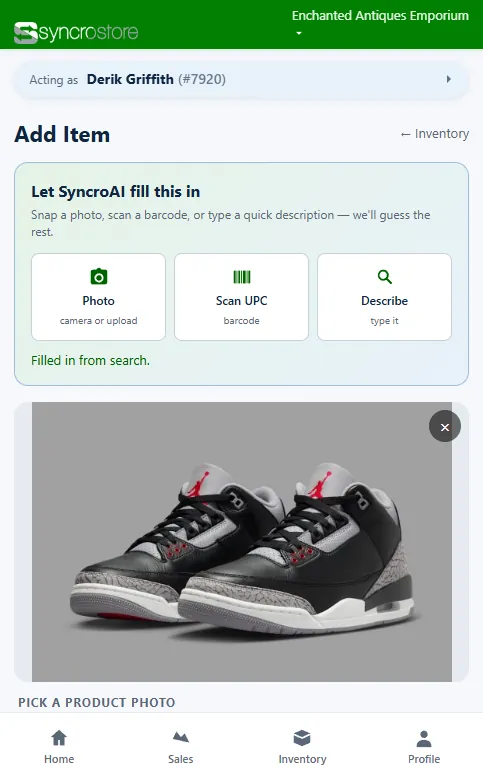
SyncroAI™ intake pulls live PriceCharting data for trading cards, games, comics and collectibles, so the person tagging is looking at what the thing actually sells for rather than what it sold for last spring. Photo, barcode or UPC in; a priced listing out.
It runs on a phone, which is where intake actually happens — standing at the case, not sat at the back-office PC.
The parts a generic register gets wrong
Variants, not duplicates
One card, many versions. Attributes and variants let a single item carry its conditions, editions, printings and finishes without you creating a separate product for each — and each variant holds its own price, cost and quantity.
The collector renting your case
Local collectors selling through your shop get a vendor ledger like any other vendor: every sale, commission, case rent and payout itemized, visible to them in their own portal. No monthly spreadsheet, no arguments about what sold.
A Global ID on every label
Every Syncrostore tag carries a Global ID barcode, so stock can move to another of your stores without being retagged. For shops that work conventions and a second location, that is a whole job that stops existing.
Singles listed once
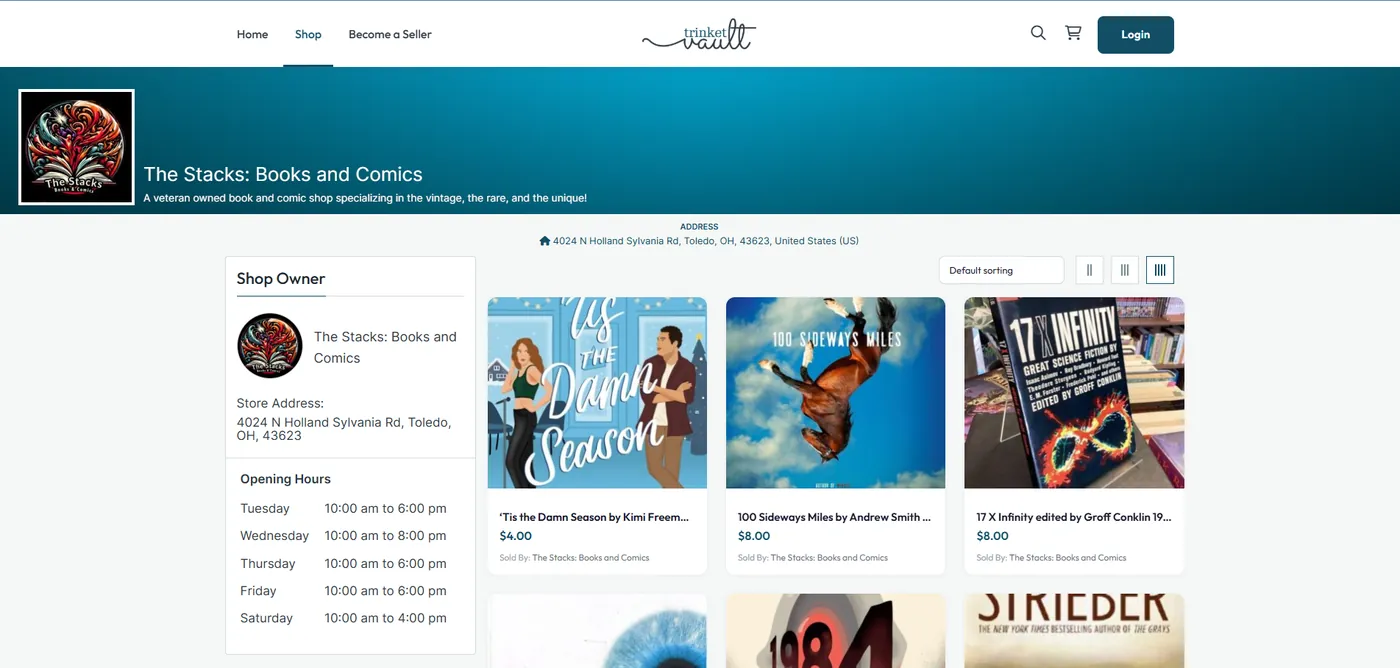
TrinketVault™ sells from the same records as the case, so a single listed online is the same item that is in the shop. Consignors can list from home too, and your shop still earns its commission on those sales.
Import what you already have
Shopify inventory imports, or our own spreadsheet template. If your singles already live in a sheet, they do not need retyping to move.
Discounts by tag
Color, date, category and volume rules run at the register, which is how bulk bins and clear-out shelves get priced without a cashier doing arithmetic in front of a queue.
Also worth knowing
Do I have to run everything as consignment?
No. Sealed product you own outright, singles you bought, and consigned cases all sit in the same store. Ownership is a property of the item, not a mode you switch the store into.
Can a consignor add their own stock?
Yes — they get a login and enter items themselves, from home if they want. You still control what goes live.
What does it cost?
Consignment Pro is $199.99/mo with SyncroPay™ and Vendor Choice Pricing, or $329.99/mo if you bring your own merchant account. One register is included; additional registers are $19.99/mo each.
Bring your worst pricing problem
Thirty minutes in the live software. Bring a box of singles and a consignment case you struggle to reconcile, and we will run them through.