
Multi-vendor retail POS for stores where vendors sell new product at volume
Shop-in-shop stores, retail collectives and boutique marketplaces put hundreds of independent businesses through one set of registers. Syncrostore is the POS and vendor accounting built for that: every line attributed at checkout, every vendor on their own ledger, and settlements that pay every vendor from one screen.
Figures as of September 2026.
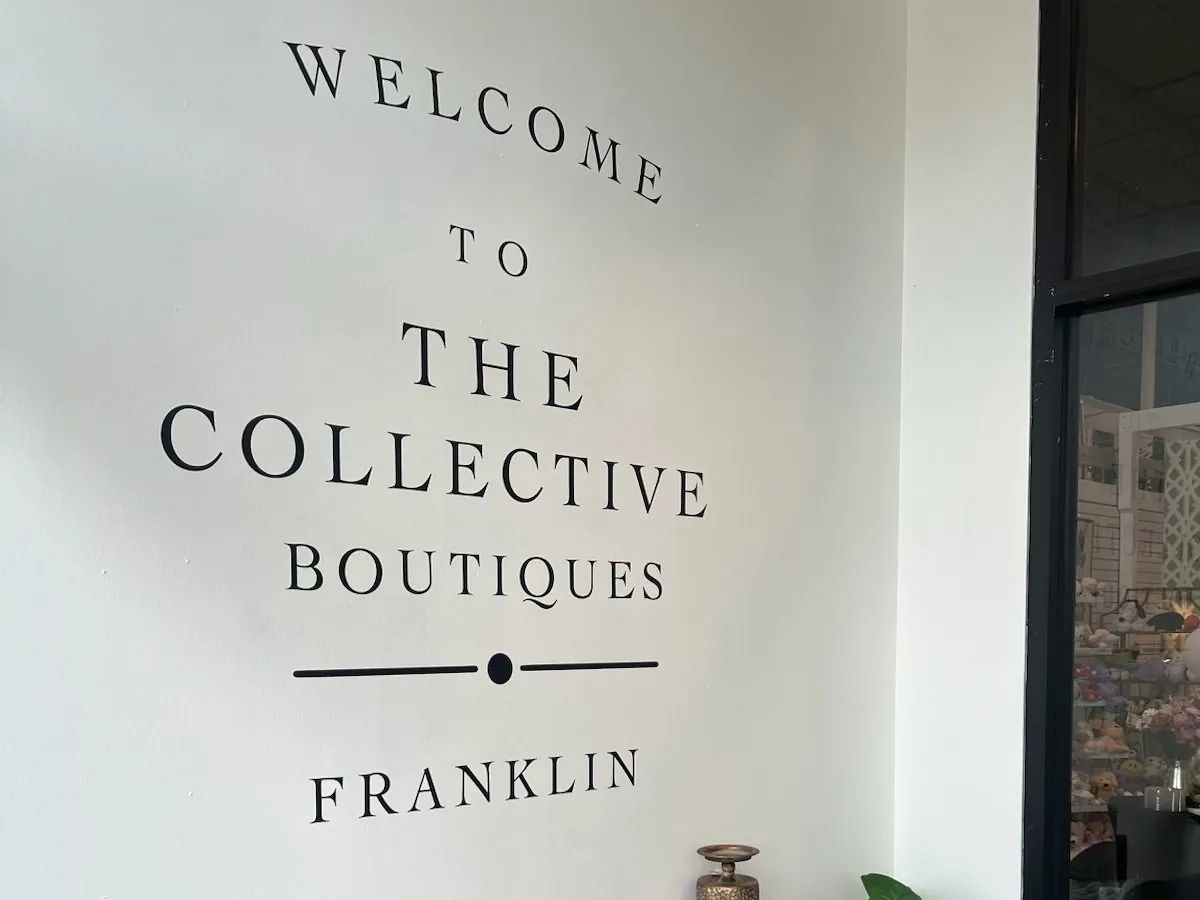
The Collective Boutiques · Franklin: a store full of independent boutiques on one set of books
“Support is quick. When we need a fix or a change it usually happens the same day, and you talk to someone who knows your setup. […] If you run a multi-vendor store, this is an easy recommendation.”
Built for the volume a large store runs
A store with a few vendors can reconcile by hand. A store with hundreds of vendors and a busy register every day cannot, so each part of the month has to run inside the system.
Mixed baskets, attributed per line
Unlimited vendors per transaction. Each line posts to its vendor’s ledger at the moment of sale, with commission, rent offset and tax worked out before the receipt prints. How multi-vendor checkout works.
Vendors bring their catalog
Shopify inventory imports directly, with variants intact, or comes in through our spreadsheet template. Vendors can also enter and price their own items remotely. Enterprise includes metered API access for connecting your own systems.
Every vendor paid in one run
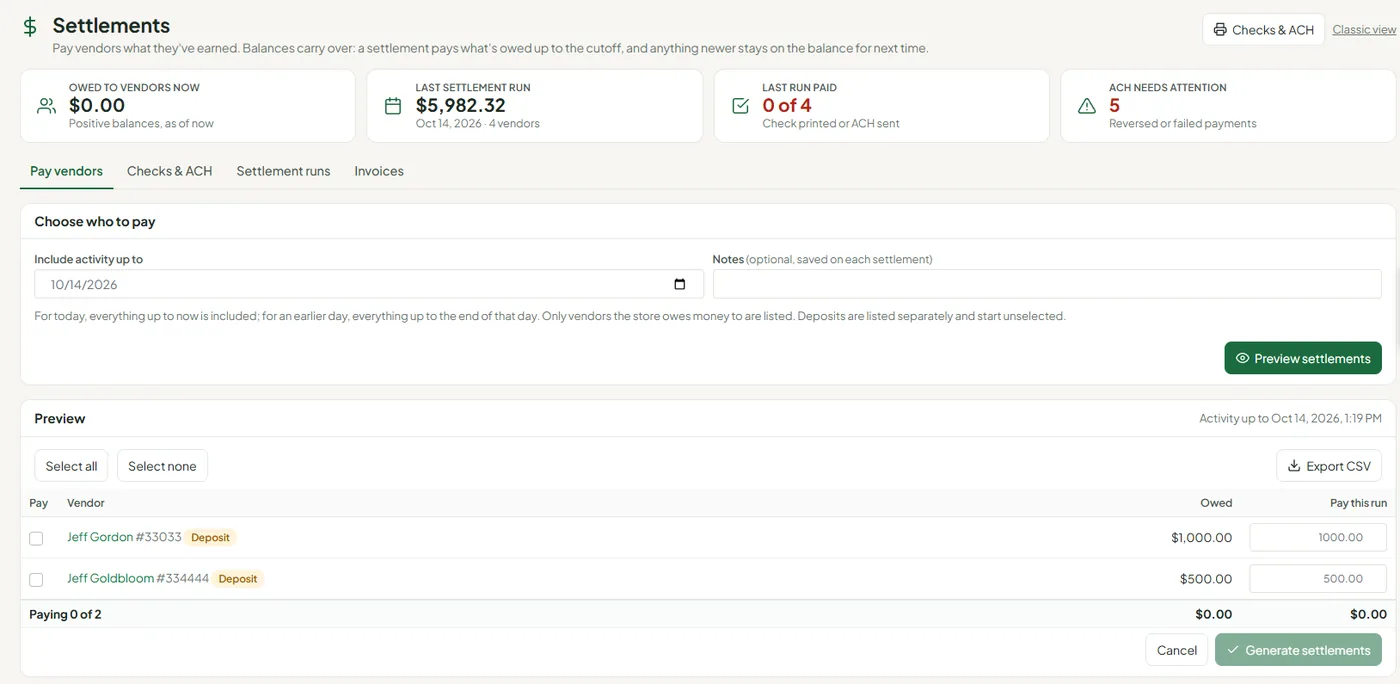
Preview the settlement, adjust line by line, then pay by ACH through SyncroACH™ or print checks from the same run. Managers can run settlements from a phone.
Not absorbed by the store
At high monthly volume, card fees are one of the biggest costs a store can move. They post to the vendor ledger, and Vendor Choice Pricing lets each vendor opt in. Run your own numbers.
One account, one payout per vendor
On Enterprise, several buildings run on one set of books with consolidated reporting and cross-store transfers. A vendor in three of your stores gets one combined settlement, with anything owed in one store netted against sales in another.
Permissions for a busy store
Admin, Manager, Cashier and Vendor permission groups, with an audit trail on the records that matter, so cashiers see the register and vendors see only their own business.
Your best vendor outgrows it first
Consignment tools assume one-off used goods with a description field. That holds until a tenant starts moving new inventory at volume. Then they need SKUs, reorders, case-quantity receiving and their own cost basis, and the software cannot follow.
What happens next is predictable. The tenant starts keeping their own spreadsheet alongside yours, the numbers drift, and eventually they leave for somewhere that can hold their business.
Moving a real catalog in
A vendor arriving with an existing shop does not want to retype their catalog. Syncrostore imports Shopify inventory directly, or takes our own spreadsheet template.
Variants come across as variants, so one product with nine colorways stays one product.
What a business tenant needs that a consignor does not
QuickBooks, both ways
Books sync straight to QuickBooks, free for you and free for your vendors. A tenant running a real business already has an accountant; this is the difference between your store fitting into their operation or fighting it.
A login, not a monthly PDF
Every vendor gets a portal with live sales, balances and statements. Shop owners check their own performance without asking your office, which is the only version of this that scales past a handful of tenants.
Rent, commission, or both
Set rent by the space and a custom commission rate per vendor. A tenant on straight rent and a tenant on a split sit side by side in the same store without a workaround.
TrinketVault™
Vendors sell online from the same records as the store, including items that live at home and never reach their space, and your store still earns commission on those sales.
ACH, on your cadence
Settle a whole cycle in one screen, then push payouts to vendor bank accounts through SyncroACH™ or print checks from the same run.
On the ledger, not the store
Card fees are accounted for on the vendor ledger. Under Vendor Choice Pricing, vendors opt in to card pricing or carry the fee on their own sales.
Multi-vendor retail POS questions
Can one store mix retail vendors and consignors?
Yes, and most do. Terms are set per vendor, so a shop owner on rent and a consignor on a split run side by side without separate systems.
Do vendors manage their own inventory?
If you let them. Vendors can enter and price their own items remotely; permissions decide how much they control.
How many vendors can it hold?
Unlimited on every plan, with no per-vendor software fee. The system was built for stores carrying hundreds.
Can vendors bring their Shopify catalog?
Yes. Syncrostore imports Shopify inventory directly, and variants come across as variants, so one product with nine colorways stays one product. Anything else comes in through our spreadsheet template.
Can it run several stores?
Yes, on the Enterprise plan: several buildings on one set of books, consolidated reporting, cross-store transfers, and combined settlements so each vendor gets one payout across your stores.
What does it cost?
$199.99 a month with SyncroPay™ and Vendor Choice Pricing, or $329.99 a month with your own payment processor, plus $19.99 a month for each additional register. Enterprise is custom. See pricing.
Bring your biggest tenant
Thirty minutes in the live software. Bring the vendor whose needs your current system cannot meet, and we will set them up on the call.